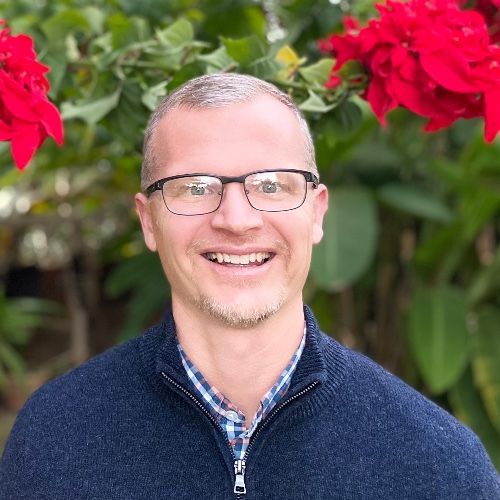
Dick Foth on When Enemies Become Friends
The exploration of the transformative power of forgiveness takes center stage as we delve into the compelling narrative of "When Enemies Become Friends." This episode invites us to reflect upon the poignant stories of Mitsuo and Jacob, two individuals whose paths crossed in the aftermath of World War II, resulting in a profound reconciliation that transcended their past enmity. We are reminded that the essence of the Christmas season lies not merely in celebration but in the opportunity for healing and connection, even amidst tension and discord. Through the insightful discourse presented by our esteemed guest, Dick Foth, listeners are encouraged to bridge gaps in their own lives, fostering an environment of grace and forgiveness. As we navigate the complexities of familial relationships during this festive period, we affirm the potential for love and understanding to prevail.
Takeaways:
- The Clarity Podcast aims to provide clarity, insight, and encouragement for life and mission.
- During this Christmas season, we reflect upon themes of gratitude, love, and reconciliation.
- The upcoming episodes feature Dick Foth, who shares insightful stories tied to hope and dreams.
- This episode discusses the transformative power of forgiveness and the journey from enemies to friends.
- The narrative explores the historical context of World War II and personal stories of redemption.
- Listeners are encouraged to foster healing and reconciliation during the holiday season.
Transcript
Foreign.
Speaker A:Hey there and welcome back to the Clarity Podcast.
Speaker A:This podcast is all about providing clarity, insight and encouragement for life and mission.
Speaker A:And my name is Aaron Sandemier and I get to be your host today.
Speaker A:I just want to wish you a Merry Christmas.
Speaker A:As we get into this Christmas season.
Speaker A:I'm sure you had a happy Thanksgiving.
Speaker A:Hopefully you had a lot of turkey and apple pie.
Speaker A:That's my favorite thing.
Speaker A:Apple pie and stuffing.
Speaker A:Those make my Thanksgiving stomach feel complete.
Speaker A:And enjoy eating those.
Speaker A:Both those things.
Speaker A:But do want to wish you a Merry Christmas.
Speaker A:I know we're entering into that Christmas season and for you, I hope it's a season of gratitude and love.
Speaker A:We're going to have a special next three weeks of the podcast where we're going to get to hear from our friend of the podcast, Dick Foth.
Speaker A:Normally, Dick appears on Backchannel with Foath.
Speaker A:And so in the last few Christmases, it's actually become kind of a Christmas tradition.
Speaker A:Dick has shared some special episodes.
Speaker A:So we're going to do three special episodes with Dick.
Speaker A:This one is going to be When Enemies Become Friends.
Speaker A:And so exciting to hear from Dick and just always learn from him and the way he's able to tie in stories and tie in those stories to make it just so much more insightful.
Speaker A:Also, Dick, he's coming out with a volume two of his audiobook series, Stories I Love to Tell.
Speaker A:This one is called Stories I Love to Tell Moments to Spark Hope and Fire Dreams.
Speaker A:And so I know it's going to be available on Spotify, Amazon, Audible, Apple Books, anywhere you want to get an audiobook, it'll be available and I know it'll be something that I will be buying for friends and family this Christmas season.
Speaker A:It's a blessing.
Speaker A:And Dick has a way of taking stories and getting people to share their story and then applying it to the broader audience and such a blessing.
Speaker A:So that's Stories I Love to Tell from Dick Foth on Moments to Spark Hope and Fire Dreams.
Speaker A:Do want to ask you to continue to subscribe to this podcast.
Speaker A:I know the podcast that I subscribe to.
Speaker A:They're the ones I listen to.
Speaker A:They're ones I hear throughout the week.
Speaker A:I know Monday and Tuesday what I'm going to listen to and I do want to thank you.
Speaker A:Many of you have listened in since the beginning.
Speaker A:I looked on the site that I upload the podcast to and it says now there's 350 that have been uploaded and have already got the episodes for the coming year.
Speaker A:Many of those in the in the queue and so excited to get those out.
Speaker A:Some fun interviews, some return guests, Mark Batterson and others that have been on the podcast in the past, but also some new guests and just been to a few conferences and got some people that I think will really add to the podcast, to the wealth of information that we've been able to learn and grow in mental health and missions.
Speaker A:Some different topics that we have not necessarily covered before and some, you know.
Speaker A:Another guest I'm looking forward to having back on is Loren Wells.
Speaker A:I learned was at a conference.
Speaker A:Got to learn some more about from her about transition and transition, how we can help our children transition in a healthier, positive way.
Speaker A:And so looking forward to having Lauren back on the podcast.
Speaker A:Well, there's no time better than now to get started.
Speaker A:So here we go.
Speaker B:We meet again don't know where don't know when But I know we'll meet again Some sunny day.
Speaker C:Well, hello again, this is Dick Foth with stories to make sense of it all.
Speaker C:That voice, what a unique instrument, if you will.
Speaker C:That voice and that song belong to a young British woman who 80 years ago in the middle of World War II, became a symbol for hope and light and a better day.
Speaker C:Her name is Vera Lynn.
Speaker C:Why don't we hear just a little bit more of that lovely voice of Vera Lynn as she sings we'll meet again.
Speaker B:We meet again don't know where don't know when But I know we'll meet again Some sunny day.
Speaker C:Born to a working class family, East End of London, she was found to have musical gifts.
Speaker C: inging with some bands in the: Speaker C:Her presence and her voice during those years came to symbolize the fighting spirit of the British people.
Speaker C:Later she would be honored by the crown, was always for decades a favorite of the British people and uniquely a favorite of Queen Elizabeth.
Speaker C:For more than 70 years, you say, what are you talking about?
Speaker C:This kind of thing.
Speaker C: le of the Christmas season in: Speaker C:Well, it's because of this day.
Speaker C: eople had been fighting since: Speaker C:And it ultimately brought British forces to places like Singapore and Burma and South Asia and In heart and metaphor.
Speaker C:When that happened, they brought that girl, that voice, that song with them, they brought viral in with them.
Speaker C:That's the context for our story today.
Speaker C:And here's the core of the story.
Speaker C: It was Christmas: Speaker C:I was a 20 year old college student in a singing group from a Christian college in Northern California.
Speaker C:And we had been invited to sing at a men's gathering at a church in Berkeley.
Speaker C:So we drove the 90 miles from Santa Cruz, California up to Berkeley and we got done with our singing, had our breakfast or dinner, whatever it was, I can't quite remember.
Speaker C:And then they introduced the speaker, he was a Japanese man.
Speaker C:And this is how he began his talk.
Speaker C:He said, my name is Mitsuo Fushida and I led the attack on Pearl Harbor.
Speaker C:And I'm sitting there thinking, what in the world?
Speaker C:How did this guy get here?
Speaker C:And then he went on to tell his story.
Speaker C:And by the end of the time, it was this profoundly moving illustration of the grace of God.
Speaker C:Because after Pearl harbor in December 41, within a few months, a plan was hatched with the help of an Army Air Corps general by the name of Jimmy Doolittle to attack the Japanese mainland by putting B25 bombers on aircraft carriers and getting in close enough to the mainland to be able to at least let the Japanese leadership know that they were vulnerable.
Speaker C:And so they practiced with these bombers.
Speaker C:I think they probably had to accommodate or change them in some way for short takeoffs.
Speaker C:And 80 young airmen volunteered along with General Doolittle to fly these missions.
Speaker C:The challenge was the problem came to be that they were discovered early by Japanese military, and so they had to take off when they were off the coast of Japan.
Speaker C:They had to take off 100 miles or more before they were supposed to.
Speaker C:That led to the problem.
Speaker C:They didn't have enough gas to get back to the ship.
Speaker C:And so they understood that they would either, you know, this could have been a suicide mission, but they understood that they might crash or have to bail out over Japan or over Japanese occupied China.
Speaker C:And that's what happened to numbers of them.
Speaker C:Many of them were put in POW camps.
Speaker C:And one of those young fliers who volunteered was a fellow from Oregon by the name of Jacob Deshazer.
Speaker C:He ended up bailing out over China.
Speaker C: And from: Speaker C:And they were just brutally attacked, brutally tortured, interrogated, flogged, starved.
Speaker C:Several of them died, several of them were executed.
Speaker C:And during that time, Jacob, who was the son of a minister, but not really close in his faith walk, asked for a Bible.
Speaker C:And it's interesting because as he describes it, this is his telling.
Speaker C:I begged my captors to get a Bible for me, he recalled.
Speaker C:And he wrote this in a little religious tract called I Was a Prisoner of Japan.
Speaker C: at last, in the month of May: Speaker C:I eagerly began to read its pages.
Speaker C:He says, this is Jacob de Shazer.
Speaker C:And I discovered that God had given me new spiritual eyes, and that when I looked at the enemy officers and guards who had starved and beaten my companions and me so cruelly, I found my bitter hatred for them changed to loving pity.
Speaker C:I realized that these people did not know anything about my Savior, and that if Christ is not in a heart, it's natural to be cruel.
Speaker C:One of the great things about his time there, and great may be overstating it, but one of the saving things of his time there is even though they were in these horrific conditions, there's something about being in a space like that with friends, with people with a common mission or a common heart.
Speaker C:There's something about walking together or knowing that you're one that has to be of help, because there are many stories like that.
Speaker C:And when I listen to that song by Vera Lynn, which is very touching to me personally, I don't exactly know why, but when I listen to it, I love the part where she's singing to a crowd of servicemen and they join in.
Speaker C:Here it is, Verrilyn.
Speaker C:And these soldiers.
Speaker B:Keep smiling through Just like you always do Till the moon skies by the dawn comes far away so will you please hello to the folks that I know Tell them I won't belong When.
Speaker C:Jake De Shazer finally was released from the POW camp at the end of the war, he went back to Japan, and there he went to Seattle Pacific University and actually became a minister.
Speaker C:Let me pause there and go back to the other part of the story.
Speaker C:Mitsuo Fushida, the leader of the attack on Pearl Harbor.
Speaker C:If you've ever seen the movie Tora, Tora Tora or Pearl harbor, it's his notes actually from that attack that were the backstory for the making of those films.
Speaker C:He went back to Japan, was based and lived in Hiroshima.
Speaker C:And for some reason, one day before the atomic bomb was dropped on that city, he was called back to Tokyo.
Speaker C:And so he survived that.
Speaker C:At the end of the war, when he went home, he went back to rice farming and along the way, he met some of his old friends.
Speaker C: So this would have been in: Speaker C:What happened there next was amazing because his friends in that camp met a woman by the name of Peggy Covell.
Speaker C:Peggy Covell had been a missionary kid.
Speaker C:Her parents had been missionaries in Japan prior to World War II.
Speaker C: And in: Speaker C:And there, when the Japanese invaded, she.
Speaker C:Peggy had been sent home as a young girl, and the parents were captured by the Japanese and ultimately killed.
Speaker C:But Peggy knew Japanese, and she volunteered to go to these POW camps and talk to these prisoners.
Speaker C:And several of them came to Faith.
Speaker C:And after the war, Fushida met some of them, and he had heard this, and he was grappling with those ideas and the story of Jesus they presented.
Speaker C:And then he was asked to come to Tokyo as a witness in the war crimes trials.
Speaker C:And along the way, somewhere in there, he picked up this tract that Jacob Deshazer had written.
Speaker C:And as a result of several of those things coming together, Mitsuo Fushido came to Faith.
Speaker C:And later he and Jake De Shazer met and they became friends.
Speaker C:How does that happen?
Speaker C:How do people who are such fierce enemies, for all the reasons that many of you would understand, how do enemies become friends?
Speaker C:And when De Shazer was reading the scriptures, his thought that he came to his understanding was that he had to do what Jesus said.
Speaker C:He said in Matthew 5, 43 and 44, you have heard that it was said, this is Jesus.
Speaker C:You've heard that it was said, love your neighbor and hate your enemy.
Speaker C:But I tell you, love your enemies too.
Speaker C:Pray for those who treat you badly.
Speaker C:As a result of that, Deshazer ends up going back to Japan as a missionary himself.
Speaker C:And Mitsuha Fushida, same thing happens to him.
Speaker C:When he came upon the d' Shazer tract, he said, it was then that I met Jesus, accepted him as my personal savior.
Speaker C:And it just is amazing that when these enemies became friends, they ultimately started traveling together and speaking together, they traveled the world, if I understand it correctly, because both of them had found light in a dark place, and their hearts were changed.
Speaker C:There is something about the power of forgiveness that sort of rides on the wings of grace that does something in a person's heart that changes everything forever, literally.
Speaker C:So when it says in this Christmas season that when Jesus came and the light shined in darkness, nobody's kidding there.
Speaker C:That's the real deal.
Speaker C:Because when forgiveness walks into the room, hate has to run away.
Speaker C:Mitsuo Fushida found that out.
Speaker C:Jake De Shazer found that out.
Speaker C:And God, in his great.
Speaker C:I started to say great good humor, but in his great grace and power, put these two leaders of men together so that they together could lead others to a knowledge of Jesus Christ that could transform their lives.
Speaker C:You know, we started out talking about World War II, and we end up talking about peace on earth toward men of goodwill.
Speaker C:There is something joyous about that.
Speaker C:And I think starting out with the song We'll Meet Again is entirely appropriate to illustrate the lives of Mitsuo Fushida and Jake De Shazer.
Speaker C:I think we ought to go out on a joyous note given that.
Speaker C:Thank you for listening.
Speaker C:Thank you for subscribing.
Speaker C:Thank you.
Speaker C:In this Christmas season, thinking about what happens when enemies become friends, and how might that happen in the world in which you live with people you know, or even in your own heart in some spaces, who knows?
Speaker C:I think we ought to go out with, well, how about Joy to the World.
Speaker C:This is Dick Foe.
Speaker C:I'll catch you later.
Speaker B:Sam.
Speaker A:When Enemies Become Friends.
Speaker A:I hope this podcast episode has spoken to you as much as it's spoken to me.
Speaker A:In this, this Christmas season, we have the opportunity to interact with family and friends, people maybe that we were acquainted with in the past.
Speaker A:And sometimes those.
Speaker A:Those people in our lives have become.
Speaker A:Become people.
Speaker A:Maybe wouldn't call them enemies, but there's been tension.
Speaker A:And my prayer is.
Speaker A:And that's my prayer for.
Speaker A:For this episode, that it will encourage us to be able to bridge those gaps and for reconciliation and healing to come.
Speaker A:Heavenly Father, we thank you for who you are.
Speaker A:We thank you for Dick.
Speaker A:We thank you for his wisdom and insight and just challenging us with When Enemies Become Friends and that story, God.
Speaker A:But I pray for each of us as we navigate this Christmas season with family and friends.
Speaker A:Friends.
Speaker A:And sometimes there can be tension in these times that you will use us to be people, that will bring healing, people that will fill gaps with grace.
Speaker A:And, God, you will help us when it comes to forgiveness in our hearts and in our lives.
Speaker A:So, Father, we are.
Speaker A:We are grateful and we're thankful for you.
Speaker A:And we pray in the coming days in this season as we remember your son's birth, that you will guide and direct our steps.
Speaker A:In your name we pray.
Speaker A:Amen.